

Last Updated: January 01, 2026
A typical bathroom paint job can range from a low-cost DIY repaint to a higher-priced professional job with repairs and premium paint.
In the U.S., professional interior painting commonly prices in a wide range because the final cost depends on prep work, paint type, and local labor rates. Many pros use square-foot pricing (often $2–$6 per sq. ft. for interior painting), then adjust for bathrooms and small-job minimums.
| Size | Walls Only | Full Bathroom |
|---|---|---|
| 3×5 ft | $105–$440 | $210–$870 |
| 4×6 ft | $135–$565 | $270–$1,155 |
| 4×8 ft | $175–$690 | $350–$1,365 |
| 5×7 ft | $175–$690 | $350–$1,365 |
| 5×8 ft | $200–$755 | $390–$1,470 |
| 5×10 ft | $230–$880 | $460–$1,785 |
| 6×9 ft | $230–$880 | $460–$1,785 |
| 7×9 ft | $250–$945 | $495–$1,890 |
| 8×10 ft | $285–$1,050 | $555–$2,100 |
| 10×10 ft | $315–$1,155 | $630–$2,415 |
| 10×12 ft | $345–$1,365 | $690–$2,625 |
| 12×13 ft | $400–$1,470 | $800–$3,045 |
| 15×15 ft | $485–$1,785 | $970–$3,675 |
These charts are typical U.S. ranges that combine:
Material-only pricing (paint + primer)
DIY total (materials + common supplies)
Professional total (labor + materials + standard overhead)
Assumptions used for consistency: 2 coats on walls, typical ceiling height, 1–2 gallons of primer depending on size, and standard paint coverage practices. Paint costs align with common retail ranges and premium bathroom paint pricing.
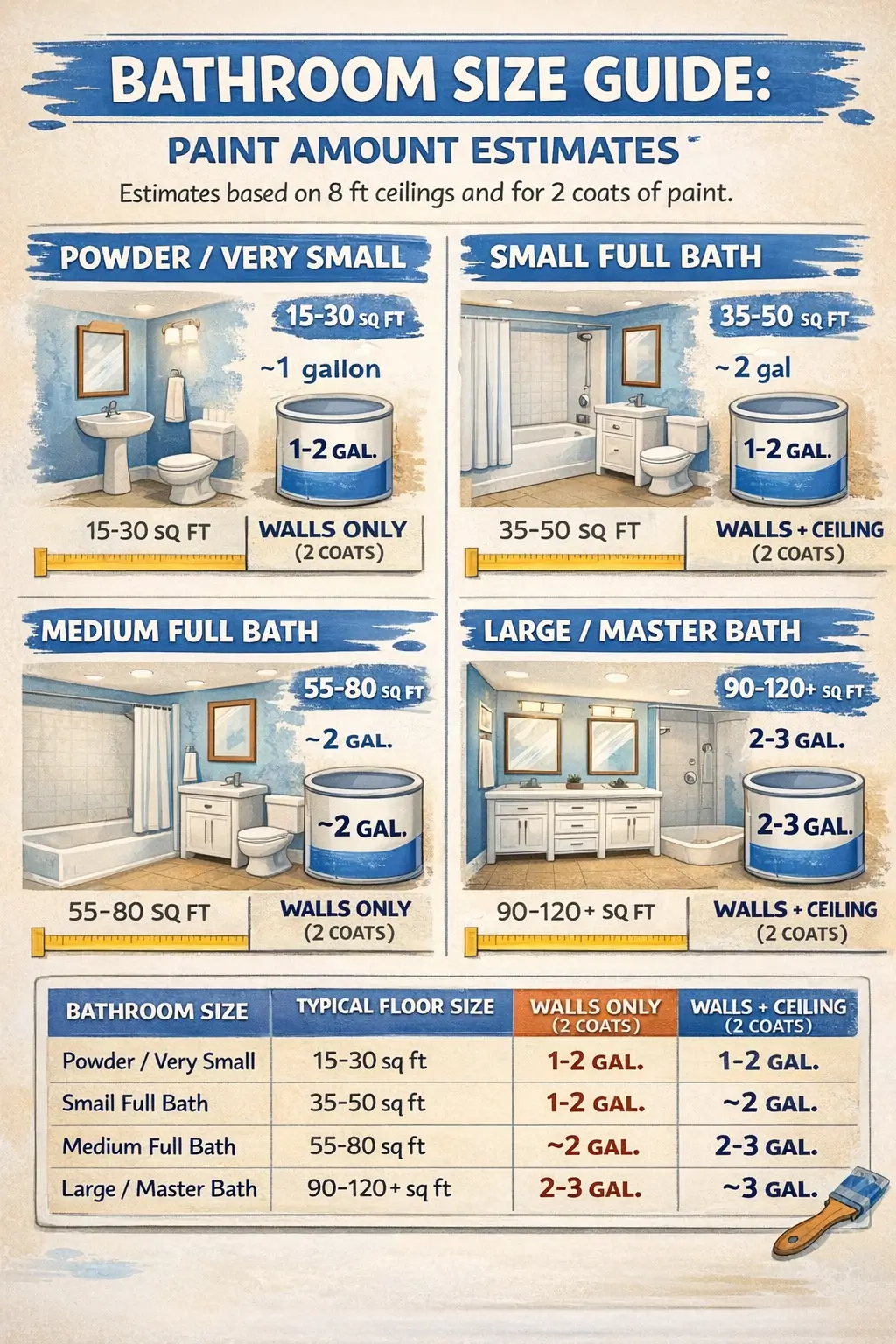
When people say “bathroom size,” they usually mean floor square footage (not wall area). For painting, wall + ceiling area matters more, but floor size is a simple way to estimate.
A practical estimate is:
Small bathroom: 30–50 sq ft floor
Medium bathroom: 51–100 sq ft floor
Large bathroom: 101–150 sq ft floor
| Bathroom Size | Materials Only (paint + primer) |
DIY Total (materials + supplies) |
Professional Total |
|---|---|---|---|
| Small (30–50 sq ft) | $70–$115 | $115–$190 | $308–$762 |
| Medium (51–100 sq ft) | $95–$160 | $150–$255 | $413–$1,128 |
| Large (101–150 sq ft) | $140–$230 | $210–$350 | $616–$1,524 |
| Bathroom Size | Materials Only (paint + primer) |
DIY Total (materials + supplies) |
Professional Total |
|---|---|---|---|
| Small (30–50 sq ft) | $80–$145 | $125–$220 | $319–$798 |
| Medium (51–100 sq ft) | $110–$205 | $165–$300 | $429–$1,182 |
| Large (101–150 sq ft) | $160–$290 | $230–$410 | $638–$1,596 |
| Bathroom Size | Materials Only (paint + primer) |
DIY Total (materials + supplies) |
Professional Total |
|---|---|---|---|
| Small (30–50 sq ft) | $200–$245 | $245–$320 | $451–$918 |
| Medium (51–100 sq ft) | $290–$355 | $345–$450 | $627–$1,362 |
| Large (101–150 sq ft) | $400–$490 | $470–$610 | $902–$1,836 |
This is mainly:
Paint (by the gallon)
Primer (if needed)
Paint commonly costs about $25–$70 per gallon, and 1 gallon covers around 350 sq. ft. in many standard cases.
Primer often costs around $20 per gallon on average, with common retail options near the mid-$20s.
DIY adds:
Rollers, brushes, tray, tape
Plastic or drop cloths
Sandpaper, spackle, caulk (if needed)
Pros charge for:
Prep time (this is big in bathrooms)
Cutting in around fixtures, mirrors, and tight edges
Cleanup and protection
Even when painter wages average around the low $20s/hour in listings, the price you pay is higher because it includes overhead, travel, insurance, and business costs.
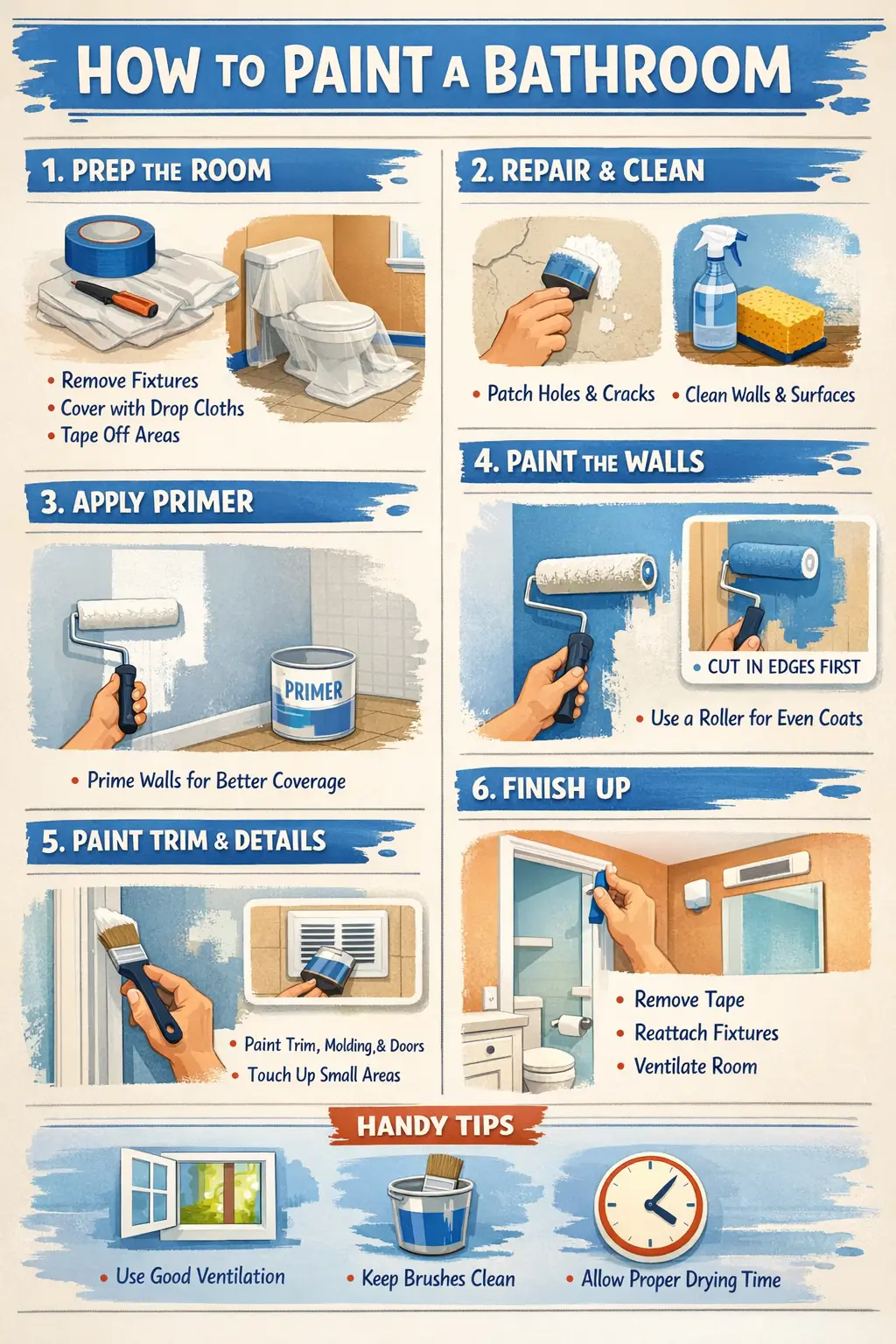
| Bathroom Size | Wall Area (sq ft)* | Paint Needed (gallons) | Total Cost Range |
|---|---|---|---|
| Small (5×6 ft) | 160 – 200 | 0.5 – 1 | $38 – $145 |
| Average (8×10 ft) | 320 – 400 | 1 – 1.5 | $75 – $220 |
| Large (10×12 ft) | 480 – 600 | 1.5 – 2 | $110 – $290 |
| Master (12×15 ft) | 640 – 800 | 2 – 2.5 | $150 – $365 |
Bathroom repaint cost is usually lower because:
The walls already have paint.
Less primer is needed (sometimes none).
Repairs may be smaller.
First-time painting or “problem repaint” can cost more when:
There are water stains or peeling paint.
Old mildew keeps coming back.
Drywall patches and caulk replacement are required.
These are the biggest cost drivers:
Surface condition
Peeling paint, bubbling, cracks, water stains, or soft drywall raise labor.
Moisture and ventilation
Bathrooms with weak ventilation often need more prep and better paint.
Paint type
Standard paint costs less.
Bathroom/humidity-resistant paint costs more.
Premium bathroom paint can be much higher per gallon (example: a premium bath paint product listed at $103.99 per gallon).
Number of coats
Dark-to-light color changes often need extra coats.
Ceiling and trim scope
Painting ceiling + trim adds time and detail work.
Small-job minimums
Many contractors have a minimum charge even for small bathrooms.
Location in the U.S.
Large metro areas typically cost more than smaller towns.
You can lower your total cost in smart ways:
Request a Concrete Roofing Takeoff or Cost Estimate.
Estimate paint requirements and costs for your bathroom project
Data based on current market averages. Paint coverage assumes 350 sq ft per gallon. Labor rates based on national averages.
Properly applied bathroom paint with mildew-resistant properties typically lasts 5-7 years in standard bathrooms and 3-5 years in high-humidity environments before showing signs of wear or mildew.
While you can use regular interior paint, it’s not recommended. Bathroom-specific paint contains additives that resist mildew and moisture, making it better suited for humid bathroom environments.
Most bathroom paints require 24 hours for surfaces to dry to the touch and 3-7 days to fully cure. For best results, avoid high humidity activities (showers) for 48-72 hours after painting.
Painting over existing wall paint requires standard prep (cleaning, sanding, priming). Painting tiles requires extensive surface preparation, specialized primers, and epoxy or tile-specific paints, with much shorter durability (3-5 years).
Professional bathroom painting typically costs 200-300% more than DIY, with labor accounting for 60-70% of the total cost. DIY saves money but requires proper tools, time, and skill.
The critical steps are: 1) Thorough cleaning to remove soap scum and oils, 2) Repairing any cracks or damage, 3) Sanding glossy surfaces, 4) Applying stain-blocking primer to water stains, and 5) Ensuring surfaces are completely dry.
Yes, bathroom cabinets require cabinet-grade enamel or urethane paint, which is harder, more durable, and better at resisting moisture and cleaning chemicals than standard wall paint.
Bathroom size directly impacts costs through: 1) More paint required, 2) More labor hours, 3) Increased complexity in larger spaces, and 4) Potential need for specialized equipment like taller ladders or scaffolding.
Repaint when you notice: persistent mildew that returns after cleaning, peeling or bubbling paint, visible water stains, fading or yellowing that cleaning won’t fix, or cracked or chipped paint surfaces.